Holiday-season cyber awareness in Europe
Introduction
The holiday season is meant to be a time of celebration, generosity, and connection. Families gather, people exchange gifts and participate in seasonal traditions, and businesses often slow their pace as employees take time off. At the same time, the digital world becomes more active than at any other moment in the year. Online shopping surges, travels are planned and tracked, deliveries are monitored closely, and charitable donations increase significantly. Unfortunately, this unique combination of emotional engagement, heavy online activity and reduced vigilance creates the ideal environment for cybercriminals to exploit.
The rise of digital dependence, e-commerce, remote work, and mobile devices has only intensified this risk. Today’s cybercriminals operate with professional organisation, advanced tools, and increasingly sophisticated techniques — including artificial intelligence (AI) — to make their attacks more realistic and more scalable than ever before. Every year, security professionals observe a sharp increase in phishing scams, ransomware attacks, data breaches, and fraud during the weeks surrounding major holidays such as Christmas, New Year, Black Friday, and Cyber Monday. Attackers understand that people are more likely to click quickly, trust familiar brands, overlook small warning signs, and unconsciously ignore unusual behaviour when they are focused on holiday obligations.
The Holiday Season: Cyber attackers are coming to town
In the cyber world, the holiday season has quietly become one of the most dangerous windows of the year for malicious cyber activity. With reduced security staffing, distracted users, and high-volume transactions, the conditions are ideal for phishing campaigns, ransomware attacks, and other malicious operations. In addition, regular system monitoring, updates and patching schedules may be postponed until normal operations resume. This gap provides an occasion for attackers as this period provides extended windows of opportunity to exploit system vulnerabilities, deploy malware and establish persistence in compromised networks without immediate detection.
Simultaneously, individuals are often rushed, distracted or emotionally engaged. People shop under time pressure, juggle personal commitments and travel logistics, and manage increasing volumes of digital communication. This creates the perfect environment for social engineering. Urgency plays an essential role in how cyberattacks succeed, and attackers rely on the fact that people are more likely to click first and think later. Emotional triggers such as excitement, fear, generosity or stress are deliberately exploited in malicious crafted messages specifically for the holiday environment.
As a result, holiday-themed scams are especially effective because they blend seamlessly into what people already expect to see. A message claiming that a delivery was missed, a payment failed, a package is waiting at customs, or a limited-time discount is about to expire does not immediately raise suspicion. These scenarios match real-life holiday behaviour. Cybercriminals copy the branding, tone and design of well-known companies, including delivery services, online platforms, banks and charities. In many cases, the only thing separating a legitimate email from a malicious one is a small detail buried, e.g. in the sender address or the underlying URL.
The price of attacks: What's really at stake?
The consequences of holiday cyberattacks can be severe. For businesses, a holiday breach can be catastrophic. It may lead to data leaks, operational downtime, legal consequences and reputational damage. In industries such as retail, logistics and finance, even a short period of disruption during the holiday season can result in millions in losses. Recovery is often slow, expensive and damaging to customer trust.
Small and medium-sized businesses are particularly vulnerable, as they often lack the resources or expertise to implement advanced cybersecurity defences. The figure below shows the increase in attempted attacks during a period of one year, July 2023 to June 2024. In this figure we see an increase in attempts during the holiday season with December jumping out most, due to the Christmas period. Attackers are aware of this imbalance and frequently target smaller organisations as entry points into larger networks.
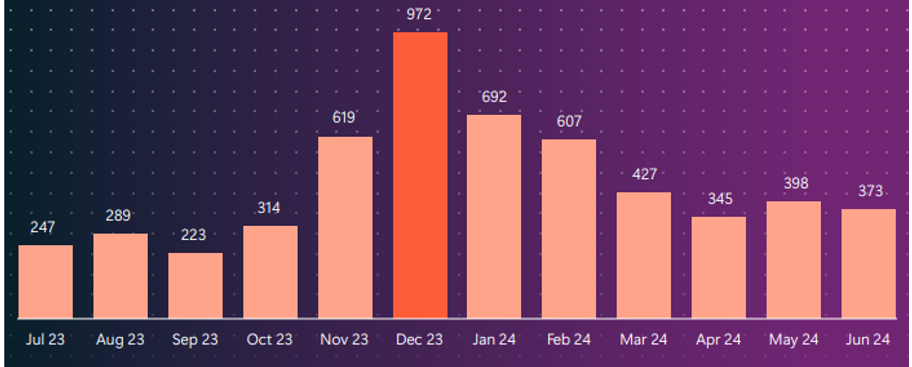
Figure 1. Attempted cyber-attacks on SME's during July 2023 until June 2024
Source: Microsoft digital defence report 2024
Common attack vectors during the Holidays
To understand why the holiday season remains such a high-risk period, it is important to understand techniques and methods used by attackers. It is therefore useful to look at which cyber threats were mostly reported throughout 2025 in Europe and how attackers get into corporate systems. The following graphic from Enisa Threat Landscape Report highlights these most prevalent attack categories.
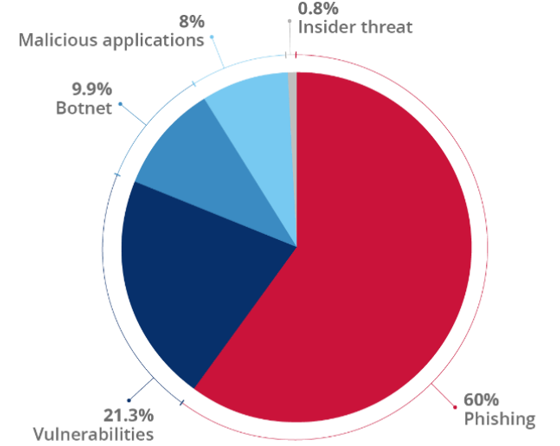
Figure 2. Most identified initial infection vector
Source: ENISA threat landscape 2025
Phishing
Phishing remains the most widespread and effective method used by attackers for initial intrusions (60% of intrusions reported). Due to the increase of Phishing-as-a-Service (PhaaS) platforms and solutions, attackers can today easily increase and spread the amounts of phishing sent.
We can therefore assume that the seasonal increase in communications, driven by the rise in promotional emails, delivery notifications, and financial alerts, will, as every year, give attackers the opportunity to hide malicious messages among legitimate communications and increase their attempts.
Whilst most of phishing relies on sending large volumes of fraudulent emails to random recipients in the hope that a percentage will respond, modern attacks have evolved far beyond generic spam. Today’s cybercriminals conduct research on their victims, using information gathered from social media, data breaches, company websites and professional networking platforms. This leads to spear-phishing attacks, i.e. a tailored attack to specific individuals or organisations and include personal details to make the message seem trustworthy and relevant.
In addition to email-based phishing, attackers increasingly rely on smishing, vishing and quishing, which use different access points but follow the same deceptive intent:
📌 In smishing attacks, criminals send fraudulent SMS messages that mimic delivery services, banks or retail platforms, urging recipients to click a malicious link or call a fake support number about a “failed delivery,” “suspicious transaction,” or “limited-time offer.”
📌 Rather than using text messages, vishing uses phone calls. Attackers impersonate financial institutions, corporate IT staff or government agencies to manipulate victims into revealing sensitive information such as one-time passcodes, login credentials or banking details.
📌 Lastly, quishing involves malicious QR codes that replace or overlay legitimate ones in public or digital spaces, redirecting users to fraudulent websites that steal personal or financial information. Because these methods feel familiar, appear official and often involve a sense of urgency, they are particularly effective during the busy and distracted holiday period.
While social engineering attacks like phishing rely on psychological manipulation, they are also supported by increasingly sophisticated technical methods.
One of the most effective techniques is typo squatting, where attackers register domains that contain small spelling errors, such as replacing a letter with a number or adding an extra character. A user who types a familiar website quickly and/or unattentively may not notice the slight difference and unknowingly land on a fraudulent page.
Another deceptive tactic is the use of homograph characters, or Internationalised Domain Name spoofing, where attackers register domains that look almost identical to legitimate ones. Instead of obvious typos like “amaz0n.com”, they swap letters with visually identical characters from other alphabets—for example, replacing the Latin “a” in amazon.com with the Cyrillic “а”. The link appears normal but leads to a malicious site. During the holidays, when people skim messages while tracking packages or checking offers, these subtle differences are nearly impossible to spot.
Such attacks can trick users into entering sensitive information or downloading malware, believing they are on a trusted site. If your organisation is targeted, attackers may capture credentials or financial data, or impersonate your brand to deceive customers and partners, causing reputational harm.
Exploitation of vulnerabilities, botnets and malicious applications
In addition to social engineering threats, the 2025 threat landscape report highlights several other major intrusion vectors:
📌 Exploitation of Vulnerabilities: Responsible for 21.3% of reported incidents, attackers seek out unpatched software or misconfigured devices to gain unauthorized access.
📌 Botnets: Account for 9.9% of intrusions. Attackers use networks of compromised devices to launch coordinated attacks or distribute malware.
📌 Malicious Applications: Make up 8% of incidents. These are harmful programs disguised as legitimate apps or files, often distributed via email or download links.
During the holiday period, vigilance may be reduced and IT teams stretched thin, increasing the risk of successful attacks. Threat actors often exploit these circumstances to infiltrate corporate environments.
The Thales Threat Landscape Report 2025 - First semester also notes that the distribution of malware has become increasingly sophisticated. Attackers are now employing innovative methods such as “ClickFix” (1) and “FileFlix” (2), which rely on user interaction to bypass automated security controls. These techniques require heightened vigilance from both IT teams and end-users, particularly during periods of increased activity and distraction such as the holiday season.
Lastly, Ransomware remains a major concern during this period. Attackers strategically launch ransomware campaigns during the holidays, knowing that organisations cannot afford extended downtime when essential services, retail operations or logistics networks are under pressure. By encrypting files and demanding payment in exchange for the decryption key, criminals exploit both urgency and operational pressure.
AI augmented attacks
By combining personalisation, speed, and scale, AI-augmented attacks reduce operational effort while increasing return on investment, making these campaigns some of the most effective and fastest-growing threats in modern cybersecurity.
Automatisation and enhanced phishing attacks
The rise of generative artificial intelligence (GenAI) and large language models (LLMs) has significantly lowered the barrier to conducting highly sophisticated and convincing cyberattacks. Tasks that once required time, research, strong language skills, and technical proficiency can now be automated in seconds. Threat actors can instruct LLMs to craft AI-generated phishing emails using publicly available information such as social media profiles, job roles, recent purchases, and organisational hierarchies. These messages are often tailored to reference colleagues, internal processes, or current events, making them feel personalised and authentic. In many cases, the grammatical accuracy, tone, and contextual relevance of AI-generated phishing emails now match — and sometimes exceed — those written by humans, making them extremely difficult for recipients to identify as fraudulent.
This technological shift has also led to the emergence of fully automated spear-phishing campaigns. Through automation, AI systems can collect and analyse information about a target, generate a customised message, and distribute it at scale with minimal or no direct human involvement. The same automation applies to mobile-based attacks, such as smishing, where AI can produce convincing SMS messages that impersonate banks, delivery services, or retail platforms. This allows cybercriminals to launch thousands of highly targeted attacks simultaneously, dramatically increasing their efficiency, reducing operational costs, and significantly improving their return on investment. What was once a manual and time-consuming process can now be executed in minutes using AI-driven tools.
Impersonation in the modern era
In addition to AI-driven message automation, Deepfake and Deep Voice technologies allow attackers to impersonate trusted individuals with striking realism. Modern AI tools can clone a person’s voice using only a few seconds of audio or generate realistic video of a person speaking. In corporate environments, attackers may use these techniques to trick employees into transferring funds, revealing confidential information, or bypassing security procedures by mimicking executives or managers.
During the holiday season, such attacks are especially potent. People are often distracted, working remotely, or operating with reduced oversight, increasing the chances of falling for impersonation attempts. Deepfakes are not limited to video, voice cloning can power sophisticated vishing campaigns, making a phone call appear to come from a trusted source. What once required advanced technical skill is now accessible to anyone with moderate computer literacy and widely available AI tools, lowering the barrier to entry and increasing the frequency of these high-risk attacks.
How to protect ourselves?
Despite the growing sophistication of cyberattacks, awareness remains one of the most powerful defences. Here are some key recommendations:
📌 Individuals should be cautious of any message that creates a sense of urgency, demands immediate action or requests sensitive information. Checking the sender’s full email address, hovering over links before clicking, and visiting websites directly instead of through embedded links can dramatically reduce risks.
📌 Organisations must focus on awareness trainings and communication, especially before high-risk periods such as the holiday season. Regular phishing simulations and awareness campaigns help staff recognise and respond appropriately to suspicious messages.
📌 Strong email filtering, domain monitoring and effective incident response plans are also essential for minimising damage when an attack occurs, especially during periods with reduced staff.
📌 Multi-factor authentication should be enabled on all critical accounts, especially email, banking and shopping platforms. This will allow to complexify the manipulation required by attackers to stole end-users access.
📌 Devices should be updated with the latest security patches, antivirus or endpoint protection software should always be active. Enforcing automated patches application and hardening configurations in computers reduce mainly the risks of unmonitored vulnerabilities during holidays periods.
Holiday cyber threats are not going away. In fact, they will likely become more personalised, automated, and convincing with continued progress in AI and data collection. By understanding how attacks work, who they target, and when they occur most frequently, individuals and organisations can reduce their risk dramatically. Cybersecurity is no longer just the responsibility of IT and Security departments — it is a shared responsibility that requires informed, alert, and educated users.
Conclusion
In summary, the ever-evolving landscape of cyber threats—particularly those driven by artificial intelligence and emerging technologies—demands an unprecedented level of vigilance from individuals and organisations alike. This imperative is further heightened during the holiday season, a time when routines are disrupted and attentiveness may wane, creating fertile ground for increasingly sophisticated attacks.
The adoption of proactive measures, such as fostering a culture of cybersecurity awareness, implementing robust technical safeguards, and promoting ongoing education, is essential to mitigating these risks. By remaining informed about the latest tactics employed by malicious actors and reinforcing good cyber hygiene practices, both at home and within professional environments, we collectively strengthen our defences against deception and exploitation.
Ultimately, cybersecurity is not solely the duty of IT professionals or specialised departments; rather, it is a shared responsibility that calls for engagement, communication, and preparedness across every level of companies. Through concerted effort and a commitment to continual learning, we can all play an active role in safeguarding our digital lives, ensuring that the festive period—and every season—remains secure and enjoyable for all.
Notes
(1) A malware distribution technique where attackers embed malicious links or buttons in emails or websites that appear legitimate. When users “click to fix” a supposed issue (e.g., a fake security alert or software update), they inadvertently download malware or grant access to attackers. This method exploits urgency and trust in familiar digital interfaces.
(2) A technique where attackers disguise malicious files as legitimate documents, media, or attachments. When users open or interact with these files—often presented as urgent invoices, delivery notes, or holiday offers—the malware is activated..
References
https://rhisac.org/wp-content/uploads/Holiday-Trends-Report-2024-Clear.pdf
https://socradar.io/wp-content/uploads/2025/12/Holiday-Shopping-Cyber-Threats-2025.pdf
https://www.prepaway.net/certification-training/rising-tide-cyber-threats-holiday-season/
https://www.trustle.com/post/holiday-cyberattacks
https://retail-today.com/black-friday-triggers-more-than-600-rise-in-attempted-retail-cyber-scams/
https://arxiv.org/abs/2511.03020