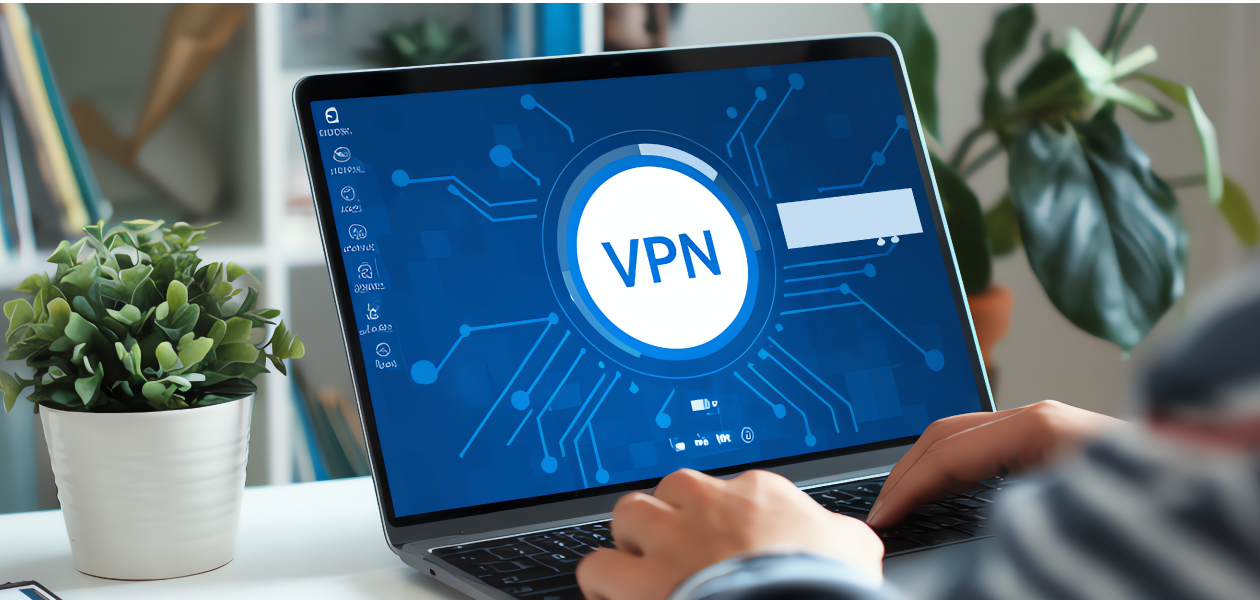
Hybrid work and sensitive data: How to secure your remote employees?
Discover in this article, how to how to secure your remote employees due to hybrid work
With remote and hybrid work becoming increasingly prevalent, the way organisations operate has undergone profound changes. Information systems (IS) are no longer confined to the walls of the premises. Employees access critical resources from a multitude of environments: at home, on the move, in coworking spaces, or while traveling abroad. Sensitive data, such as confidential documents, strategic projects or personal information, cannot be left without appropriate protection. At a time when digital uses are evolving rapidly, there is an urgent need to adapt cybersecurity practices to new risks.
1. Hybrid work: A new target for cyberthreats
Hybrid work has brought great operational flexibility, but it has also increased the number of potential entry points for criminals. By leaving the strict confines of the company, employees expose themselves to risks that IT teams cannot always anticipate or control.
A number of practices that have become commonplace are often unsupervised:
- Remote connections via public or insecure Wi-Fi networks.
- The use of personal devices (BYOD) not protected by corporate tools.
- The use of unencrypted messaging to discuss sensitive business topics.
- Persistent bad habits: sharing passwords, lack of updates, tools installed without approval from the IT Department.
Mobile devices, including smartphones and laptops, are becoming prime targets for cyberattacks. Loss, theft, or a simple authentication vulnerability can be enough to compromise access to confidential files. Many employees also use temporary storage (such as USB keys or local files) without encryption, which further increases risks.
Furthermore, voice and video conferencing are not always secure. When critical meetings are held using public tools, communications can be easily intercepted.
Finally, IT supervision is becoming complex: accesses are multiplying, user rights are not always promptly revoked, and applications that have not been approved by IT are becoming commonplace. Without visibility and centralised control, businesses lose responsiveness and security. While usage is often problematic, the devices used by remote employees are also a weak link in the security chain.
2. Securing people as well as machines
Faced with this rapid change in usage, raising awareness is no longer enough. The aim is not simply to impose rules, but to build a shared cyberculture. This begins as soon as new staff arrive, during their onboarding process. Risks need to be explained simply, without making people feel guilty, including practical ways to avoid them.
Cybersecurity needs to be explained, popularised, and integrated into everyone's daily life. A good password, vigilance when sharing documents, and scrutinising links received by e-mail can make a major difference.
But to be truly effective, these efforts must be accompanied by appropriate solutions. Cybersecurity tools must be user-friendly, transparent, and designed for business applications. A solution that is too complex or too intrusive will be bypassed.
Collaboration between IT, HR and business teams is essential. Together, they can identify needs, support users and deploy the right tools at the right time. Such an alliance makes it possible to create secure work environments without hampering the organisation's agility.
3. An effective security architecture: Operational, sovereign and certified
It is crucial to implement a trusted architecture, designed for real-world use, to protect sensitive data in the age of hybrid work. This is based on several technical and organisational pillars:
- Adoption of the Zero Trust model has become unavoidable. This means never granting access by default, even to a user who has already been authenticated. Every action and every connection must be checked. This involves techniques such as strong authentication, access segmentation, and centralised rights management.
- Endpoints must be secured: smartphones, tablets and computers must be encrypted, regularly updated, and protected against intrusions. Deploying MDM (Mobile Device Management) solutions enables these devices to be supervised remotely, revoked as necessary, and data to be erased in the event of loss or theft.
- Meanwhile, end-to-end encryption must be equally applied to all communications, including voice calls, file exchanges, and instant messaging. The objective is simple: to ensure that only authorised individuals can access communications.
But beyond the technical aspects, the requirements of sovereignty, compliance and resilience must now be fully integrated into the range of solutions. In sensitive environments, it is crucial to rely on tools designed and hosted in France or Europe, certified by recognised authorities such as ANSSI, and capable of ensuring total control over data flows. This posture not only enhances security in the face of external threats but also ensures strategic independence, sheltered from economic or geopolitical pressures.
Finally, security can no longer be treated as a secondary consideration. It must be integrated right from the design of tools and processes; this is the so-called “by design” approach. This method reconciles ease of use, operational requirements and a high level of protection, without trade-offs for users.
Uses have changed, and so have threats. Employees, whether working remotely or travelling, are now on the front line when it comes to cyber-risks. Attackers target the most isolated, exploit lapses in attention and take advantage of IT teams' lack of visibility.
Organisations must assess their practices, step up in-house training, modernise their tools, and, above all, surround themselves with trusted partners. This is the price they will have to pay to ensure the security of their most precious data, while offering their teams an agile and serene work environment.